top of page



The greatest obstacle to actualizing our potential is the illusion of a disembodied mind.
Explore the intersection of neuroscience, psychodynamics, and high-performance strategy. The Sovereignty Journal is a dedicated space for dissecting the biological architecture of the mind and body. Here, we move beyond basic 'awareness' and dive into the physiological realities of human excellence—offering frameworks to clear cognitive bottlenecks, reorganize your internal base code, and transform systemic loops into active progress. Discover the science of sustainable excellence:
Cognitive Frameworks
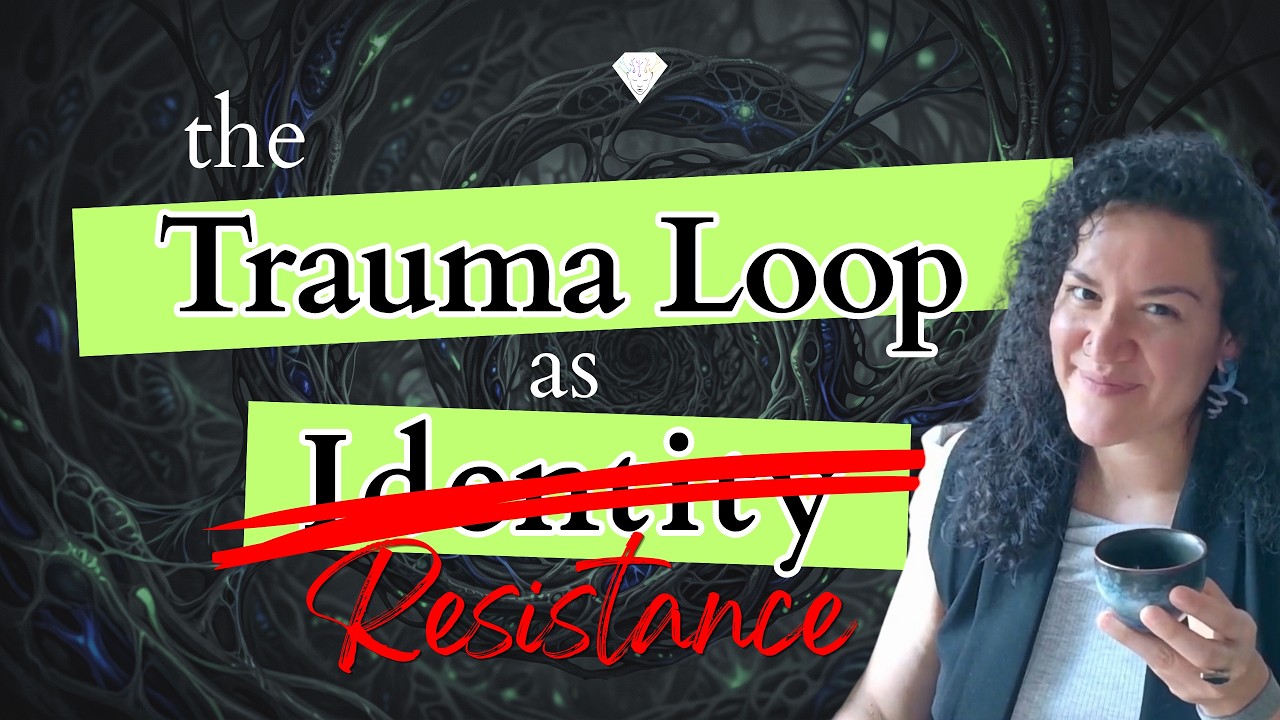
The Trauma Loop as Resistance [the Active Resistance Loop] (EP4)
In this episode, Dr. Alina Soto exposes the mechanics of the "Active Resistance Loop"—explaining how externalizing pain strips away the nervous system's internal direction (Y-axis) and keeps us addicted to traumatic cycles. Dr. Soto outlines the neurological mechanisms behind trauma response, including Amygdala-Hippocampal Uncoupling, high Allostatic Load, and how ancient biological fail-safes lock the Default Mode Network into continuous threat prediction. By analyzing secon

Dr. Soto
Aug 268 min read


Toward Integrated Sovereignty: Navigating Cognitive Autonomy and Digital Fragmentation in 2026
You find yourself snapping at a coworker for a minor typo, and five minutes later, you’re left wondering where that level of venom came from.1 It’s a moment of the "Shadow" surfacing—a sign that your internal operating system is fragmented. In 2026, where Agentic AI and digital saturation threaten to offload your very thoughts, maintaining "Integrated Sovereignty" is no longer optional.2 It is the radical act of reclaiming the space between stimulus and response, ensuring you
Dr. Soto
Jul 83 min read


Quiet Burnout and the Erosion of Innovation Capacity: When Productivity Masks Collapse
You spent years climbing the corporate ladder, driven by the belief that the next promotion or the next successful launch would bring the fulfillment you’ve been chasing. But now that you’ve arrived, you’re met with a "growing emptiness" you keep trying to ignore.1 Success has stopped feeling like success. You are still hitting every deadline and leading your team with precision, but inside, you feel flat, disconnected, and weary. You are not "exploding" with burnout; you are
Dr. Soto
Jun 173 min read


Invisible at the Summit: Identity Fusion and the Architecture of Success-Based Loneliness
Princess Diana was one of the most photographed women in history, yet she spoke of an "intense pressure and scrutiny" that left her feeling desperate and alone. Despite the public adoration, she felt invisible because the world related only to her title and her role, not to the human beneath them. This is the reality of identity fusion: the more successful you become, the more your title consumes your humanity, until you feel like a "ghost in your own life"—a shadow passing t
Dr. Soto
Jun 103 min read


The Sovereignty Paradox: Relational Attrition and the Hyper-Independence Trap
Consider "Dalia," a high-achieving professional whose life is a masterclass in competence. She hits every deadline, leads every committee, and is the first person friends call in a crisis. But behind the "impeccable performance of strength" is a quiet exhaustion she refuses to name. She has learned that "needing" is dangerous, and so she processes every challenge in solitude, convinced that if she doesn't do it all, everything will fall apart.1 Her hyper-independence isn't a
Dr. Soto
Jun 33 min read


The Intellectualization Shield: Psychodynamic Origins of the High-Achieving Self
You are mid-sentence in a conversation that finally feels "real," explaining a complex connection that bridges three different fields of study. Suddenly, you sense it: the exact moment the other person's brain stops processing. You watch the "light go out" in their eyes as they lose the thread. In that instant, you are alone again, left with a heavy mix of void and sorrow—a specific kind of intellectual grief that suggests you may never be truly seen for the depth you carry.
Dr. Soto
May 274 min read


The Zeigarnik Effect and the "Ugly Clog"
Imagine you are operating a top-tier workstation—the kind of machine designed for complex simulations and high-speed data processing. Yet, despite its specs, the interface is lagging. Applications are crashing. The culprit isn’t a lack of processing power; it’s a thousand invisible background tasks—automatic updates, unfinished downloads, and zombie processes—that have never been closed.
Dr. Soto
Apr 223 min read


The Mind-Body Bridge: Naturopathic Philosophy Meets Psychotherapy & Neuroscience:
The greatest obstacle to Mental Health is the illusion of a disembodied mind. It affects not only how an individual looks at their own healing, but the process of healing in others as well. Without understanding the physicality of emotions, thoughts, and beliefs, an individual cannot effectively utilize the full power of the mind. Much of thought is non-verbal, an internal language of sensation processed through the entire nervous system.1 I found that traditional therapeutic
Dr. Soto
Apr 1511 min read
bottom of page